Thursday - December 04, 2025
Weather:
23°C
Brachiaria grass will make your cow produce more milk
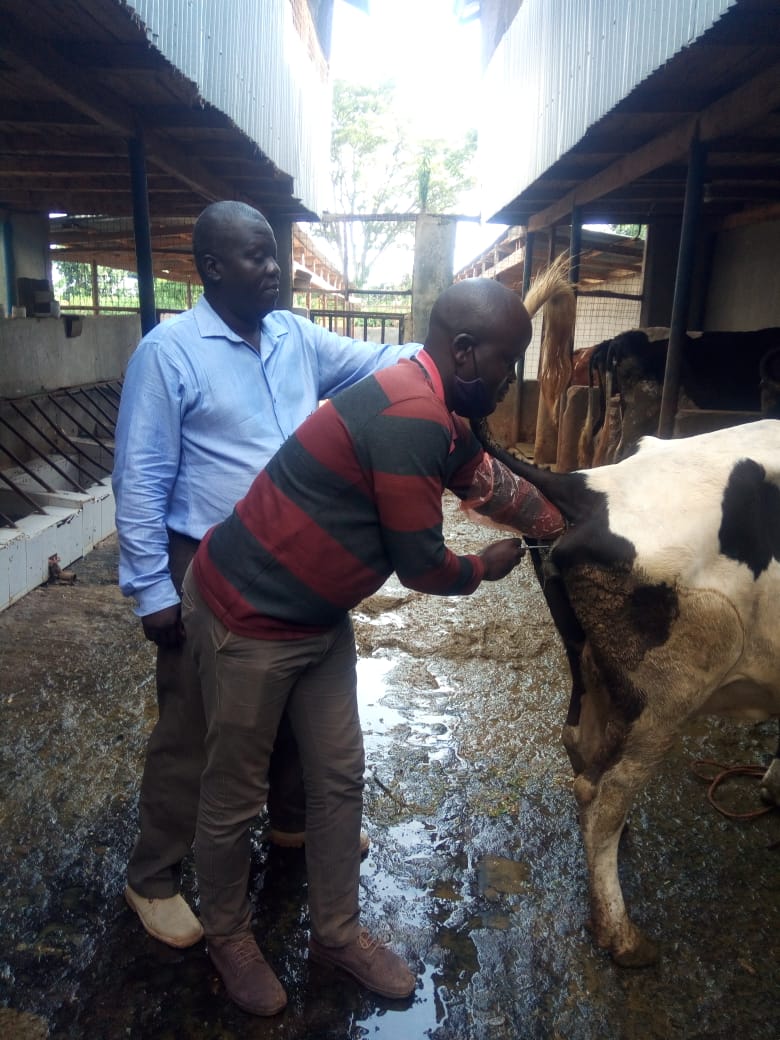
| Written by: Maurice Rangoma | | |Farmers who are at pains to make their cows produce more milk should give a shot at Brachiaria grass. This grass has mesmerized farmers who have planted and used it. Dairy farmers who have tried it in Malindi, Kilifi, Machakos, Makueni, Uasin Gishu, Trans Nzoia, Nyandarua, Nyeri, Embu and Meru have reported massive boosts in milk production without supplementation with concentrates.
Read more: Brachiaria grass will make your cow produce more milk
How to utilize maize stover for animal feed
| Written by: Maurice Rangoma | | |
The most important constraint in dairy cattle production in Kenya is the quantity and quality of feed offered to the animals. This problem can addressed if farm by-products such as maize stover, millet and sorghum stovers are treated for utilization by cattle and other domestic ruminants. The idea is to improve the nutritive value of maize stover and straws by use of urea solution which is usually abundant in the farm.
Improved mobile feed troughs
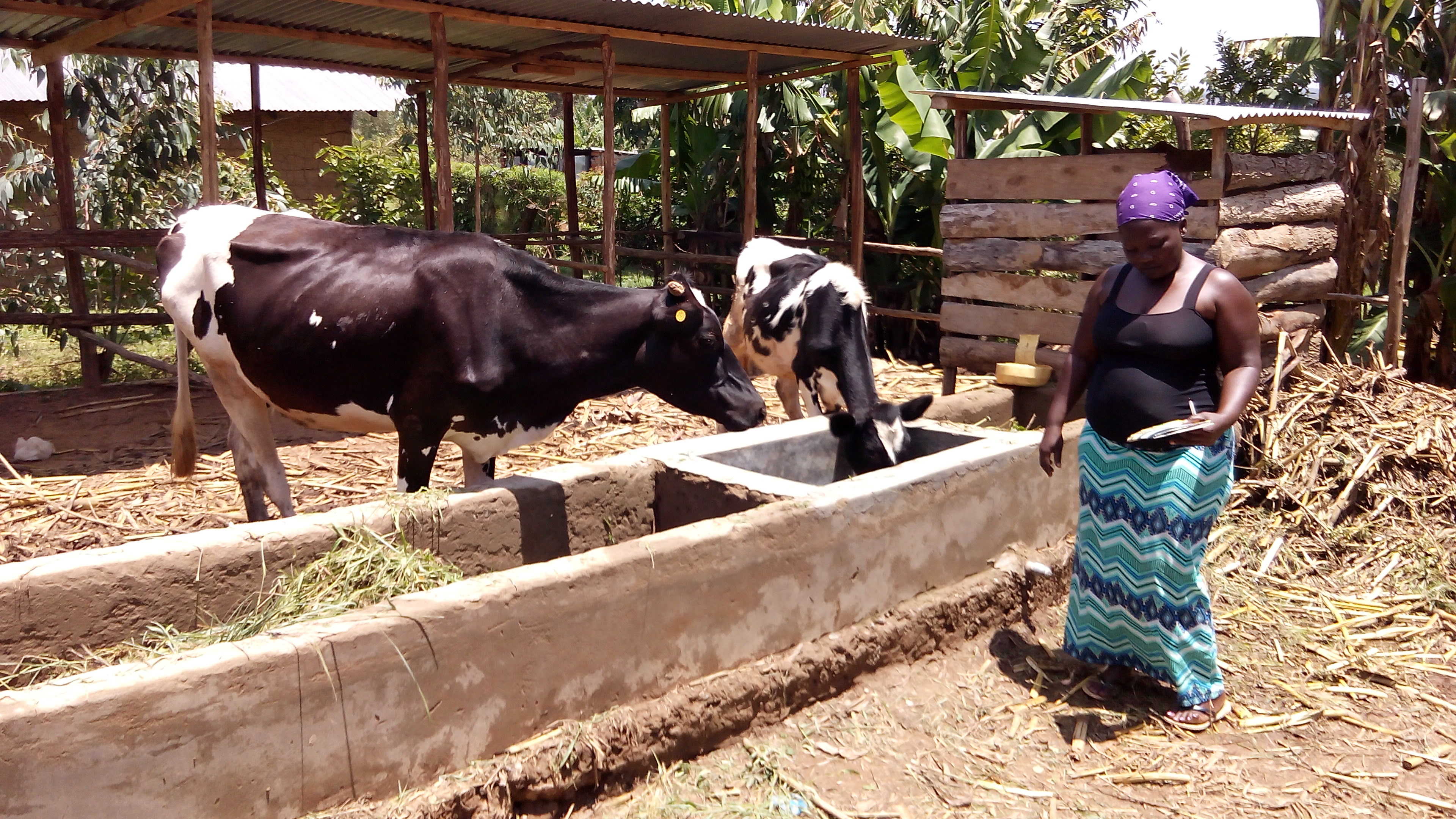
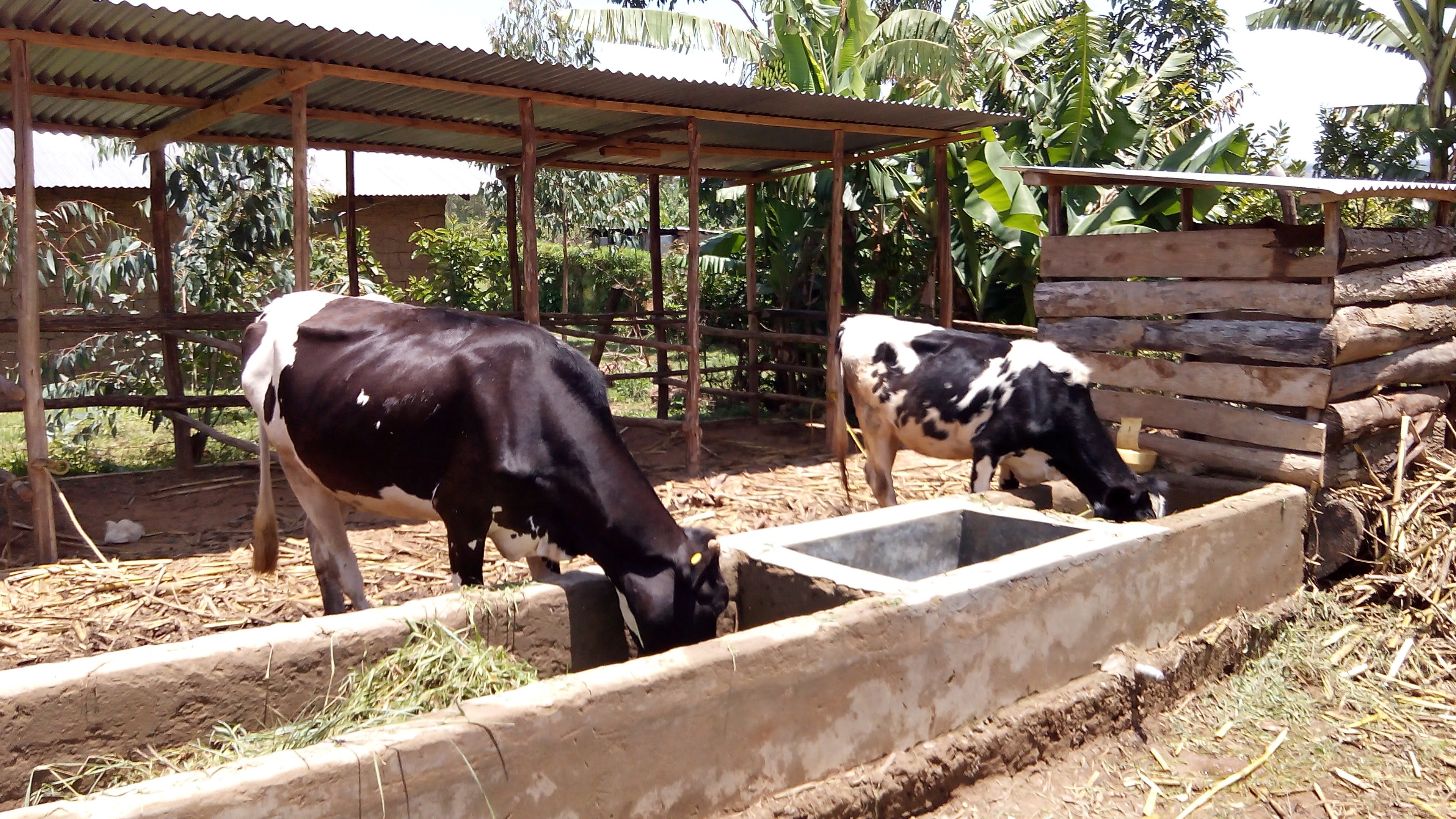
| Written by: Peter Muiru | | |Improved mobile feed troughs can be open or sheltered. Regular shifting to avoid muddy and wet conditions ensures that cattle are fed on a clean and hygienic environment. The sheltered improved mobile feed trough is better because it protects the feed and reduces losses associated with the weather.
The cost of constructing a zero grazing unit is normally high for most farmers but owing to small land sizes they are forced to raise dairy cattle in systems akin to zero grazing. But the feeding environment is usually so bad such that losses outweigh the benefits. It is estimated that about 50% offered this way is usually wasted.
Farmers have devised many ways of enclosing their animals and feeding them

there. Most of them are roofless enclosures on earth floors where feed and water troughs are provided. Some farmers just place the feeds on the ground. Accumulation of urine, dung and mud particularly in the wet season rapidly worsens the hygienic condition and predisposes the cows to pests, parasites and diseases. The animal becomes extremely uncomfortable which ultimately results in reduced milk production.
This situation need not continue because there is an affordable and better way of presenting the feeds to the cows without constructing a conventional zero grazing unit. Feeds constitute over 70% of the cost of production and all efforts should be made to improve its utilization for the farmer to realize maximum benefits. The use of improved feed trough will help the farmer to reduce the cost of feeding in the farm.
Construction of improved feeding trough
Measurements are in feet

Roof
Use a 2 or 3m iron sheets mounted on 4 pillars. It should be elevated to prevent direct sunlight and rains.
Sides
The three sides should be open and one half closed to prevent cows feeding from any direction. This is important to reduce feed losses out of cattle feeding habits. Timber or suitable local materials can be used.
Feed box
Timber is the most suitable material because of ease of cleaning. Other materials may be used. The feed trough should be large enough to contain roughage and long enough to accommodate all the animals. A spacing of 2.5 – 3.0ft (80 – 90cm) per adult animal is required.
Raise the floor of the feed troughs 6 inches (15 cm) above the floor. The inner wall should not be very high; the top should just touch the dew lap when the animal is feeding. Raise the outer wall high enough to prevent the animals approaching the feed trough from the opposite side and wasting feeds.
Pig housing plans for small scale farmers
| Written by: silas | | |Have you been looking for a standard type of pig housing plans for small scale farmers? Well, there is no standard pig housing plan. Designs and housing plans for pigs are normally chosen to fit the management system that is most appropriate to the situation.
Pig production forms a minor livestock activity in Kenya
| Written by: Maurice Rangoma | | |Pig production forms a minor activity in Kenya and lags behind dairy, beef, sheep, goat and poultry. Despite the gloomy history of pig farming in Kenya, pig production has a huge potential in transforming livelihoods in the country. At present the pig population is 200,000 according to the 2009 KBS figures.
The Kenyan population is currently at 38 million people and projected to increase at 10 million people every decade. This means that the population pressure will soon overstretch the available resources, of most concern being land for the simple reason that it is fixed.
For livestock to play a significant role in optimizing the capacity of the country to realize food security, it is important to give priority to species that combine efficiency of conversion and productivity; and have the capacity to use by-products and residues from other primary industries.
Although there is a role for the small, as opposed to large ruminants, and the small non-ruminant herbivores, pigs and poultry are certainly the ideal animal species in this scenario. High reproductive rate is what gives the competitive edge to these species. For example pigs have higher reproductive rates and are prolific compared to cattle, sheep and goats. A sow produces 6 to 14 piglets and weans on average 8 to 10. It furrows twice a year therefore the advantage of continuous harvest.
Compared to other livestock species, non ruminants like pigs and poultry require less space at the farm. As farm sizes become smaller due to population pressure, farmers will have to rethink their production priorities and shift to intensive systems regardless of the huge capital requirements. Many farmers are into poultry but pig production has unfortunately lagged behind.
Looking at pig production in particular and despite the many constraints, there are tremendous economic benefits in national engagement in the enterprise. The demand for animal protein is on the increase and the rate of increase is a crucial factor so that even if the per capita consumption remains static, the total demand will increase substantially. Pig meat is bound to contribute to protein demand because of the following among other reasons:
- Invested capital produces returns quicker compared to beef
- Pigs are affected by very few diseases hence farmers in areas with endemic diseases like tick borne disease and Trypanosomiasis are better off with the pig.
- Pork contains all the essential amino acids required for human consumption
For pig production to spread and gain wide acceptance across the country factors affecting pig production in Kenya need to be addressed. Some of these include:
- Availability of grain feeds and grain by-products – 60 to 70% of pig feed contain grains and grain products therefore pig production will concentrate in areas with sufficient grain.
- Climate – pigs are not commonly found in hot humid areas because of heat stress. Production should therefore be intensive in cooler areas.
- Socio-cultural factors
- Religion – Muslims, SDA and other groups do not consume or keep pigs
- Nomadic life – it is difficult to move with pigs
- Pig handling is difficult and new to most people
- Lack of steady market for pig meat
- Lack of strong government support for pig project
- Management skills of most farmers are low
- Shortage of suitable breeding stock
Page 2 of 4
ADVERTISEMENTS
Popular Posts
Recent Posts
- What is happening with New KCC milk payments?
- Value of livestock and agricultural production reached R$ 122.4 billion in 2023 - Agência de Notícias - IBGE
- Why items sold on local farms might not be safe to eat. What you need to know before buying - PhillyBurbs
- I was chased like a dog from my farm as I had no lease agreement – Caleb Karuga
- Study shows access to infrastructure can increase youth engagement in agriculture