
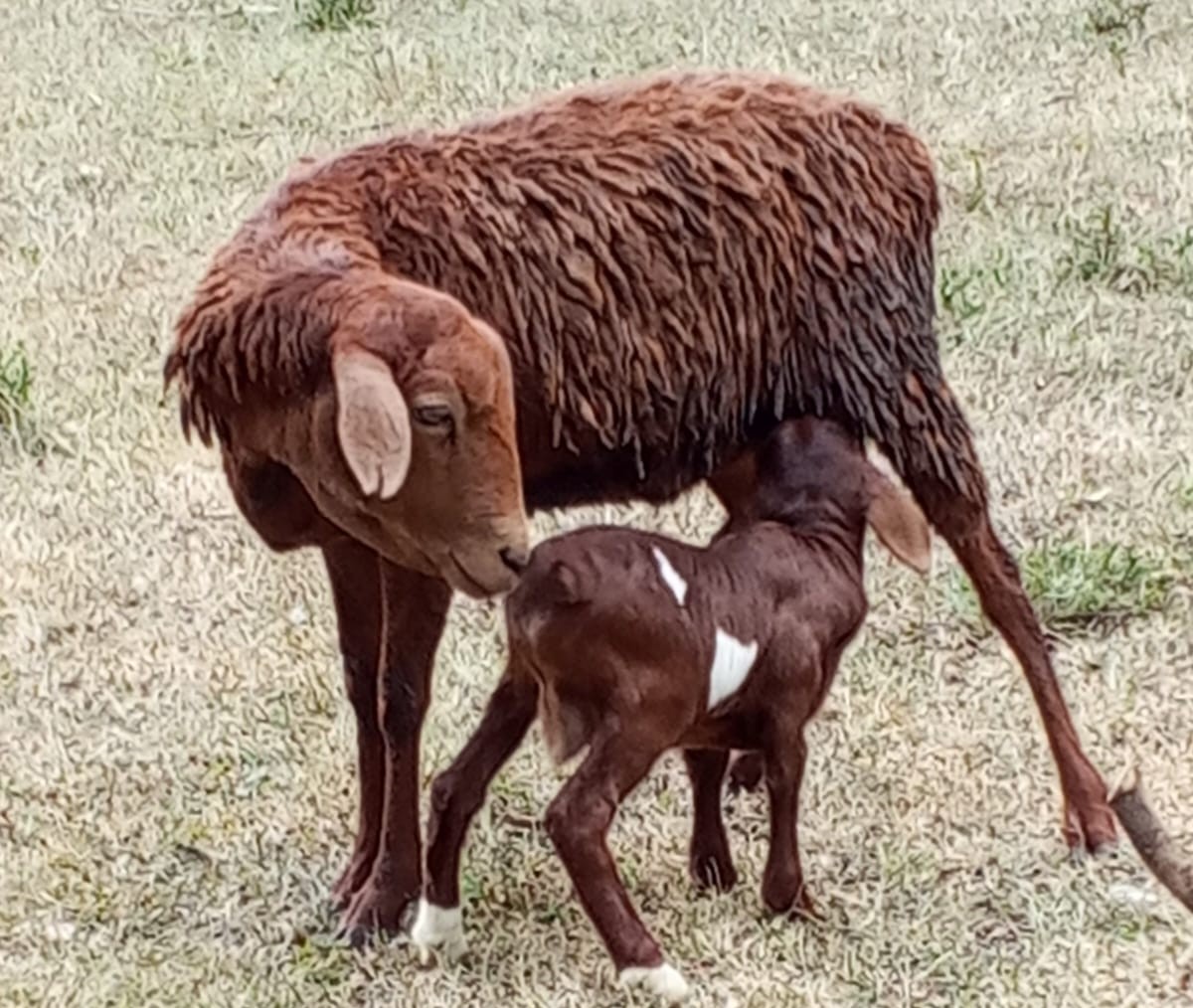
The Red Maasai is a hardy East African hair sheep prized for meat and exceptional resistance to internal parasites — an excellent selection for pastoralists in arid and semi-arid areas who need low-input, climate‑resilient stock. Pure Red Maasai numbers are declining due to crossbreeding with Dorpers, so buy registered stock and prioritize selective breeding to retain parasite resistance and heat tolerance.
Key facts at a glance
- Origin: Indigenous to Kenya and Tanzania; traditionally kept by Maasai pastoralists.
- Type: Fat‑tailed hair sheep (no wool) kept primarily for meat.
- Hardiness: High tolerance to heat, drought, and internal parasites (notably Haemonchus contortus).
- Conservation status: Purebreds are declining because of widespread crossbreeding with Dorper; conservation and controlled breeding are recommended.
Practical comparison: Red Maasai vs Dorper
|
Attribute |
Red Maasai |
Dorper |
|
|
Primary use |
Meat; low‑input systems. |
Meat; higher growth under good inputs. |
|
|
Parasite resistance |
High. |
Lower; more susceptible. |
|
|
Heat/drought tolerance |
Very good. |
Moderate; performance drops under heat stress. |
|
|
Growth & carcass |
Moderate; heritable growth traits allow improvement. |
Faster early growth; often used to boost productivity via crossbreeding. |
|
What this means for you in ASAL
- Why choose Red Maasai: If your priority is low veterinary costs, survival in variable feed/water conditions, and reduced losses to internal parasites, Red Maasai are well suited to harsh environmental conditions.
- When to avoid pure Red Maasai: If you need very rapid weight gain for short-term market cycles and can provide higher-quality feed and intensive parasite control, Dorper or Dorper crosses may give faster returns, but at higher health risk.
Actionable husbandry & breeding tips
- Buy registered or traceable stock to avoid losing purebred traits; contact local breeders or the Red Maasai Sheep Breeders Society of Kenya.
- Select for parasite resistance and growth: ILRI data show Red Maasai have heritable growth traits and strong survival, so selective breeding can improve weight while retaining resilience.
- Pasture and parasite management: Use rotational grazing, targeted deworming based on faecal egg counts, and avoid indiscriminate crossbreeding that dilutes resistance.
- Record keeping: Track parentage, lambing dates, weights at birth/weaning to guide selection; Red Maasai respond well to selection.
Risks, trade-offs, and next steps
- Trade-off: Crossbreeding with Dorper increases growth but reduces parasite resistance and heat tolerance therefore weigh short‑term gains vs long‑term flock resilience.
- Visit local extension or livestock officers to locate registered Red Maasai breeders, request pedigree info, and plan a 3‑year selective breeding program focused on survival and moderate growth.
Comments